
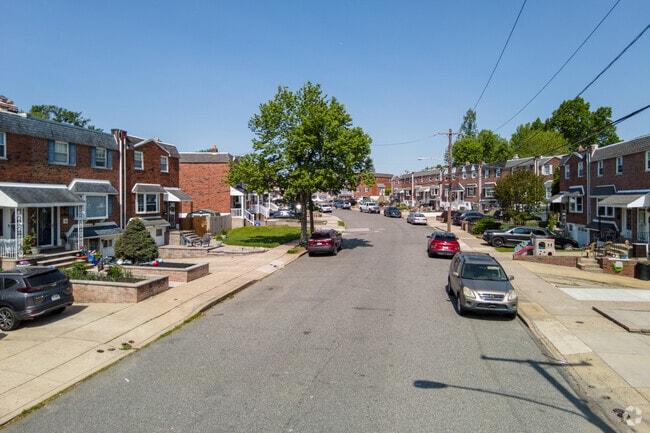
The first thing you notice about Parkwood is that it feels planned rather than pieced together. Most of the neighborhood was developed in a concentrated period by the Korman Company, beginning around 1960. Korman's own history describes Parkwood Manor as its largest Philadelphia development, with more than 800 homes getting underway in the early 1960s. (Korman Communities) The result is a neighborhood with a remarkably consistent architectural character.
Today, Parkwood has roughly 17,400 residents and is centered in ZIP Code 19154. Its location near Poquessing Creek, Woodhaven Road, Knights Road and the Bucks County line gives it a distinctly suburban feel, while Philadelphia’s services, SEPTA and Center City remain accessible.
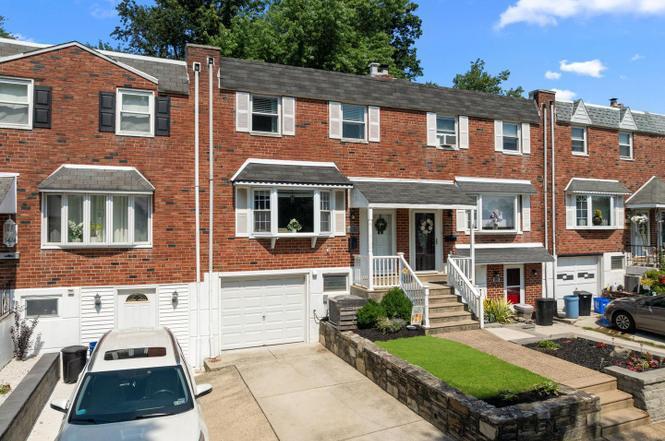
The predominant housing is the 1960s red-brick rowhouse or townhome, many with attached garages, driveways, small front yards and larger rear yards. There are also some twins, condominiums and detached homes, particularly in sections such as Liberty Square. Most of the housing is owner-occupied, and the neighborhood has a noticeably family-oriented character. (Homes.com)
Parkwood's streets are generally quiet and residential, with sidewalks connecting the homes to playgrounds, schools and neighborhood shopping. The community is also known for its strong tradition of holiday decorating. Some blocks coordinate their displays, making Christmas, Halloween and the Fourth of July particularly festive times of year. (Homes.com)
Geographically, Parkwood sits between Woodhaven Road to the southwest, Knights Road to the southeast, Poquessing Creek to the east and the Byberry East Industrial Park to the north and northwest. Philadelphia Mills is immediately adjacent to the residential area. (Wikipedia)
Parkwood's lifestyle is essentially suburban Philadelphia without leaving Philadelphia.
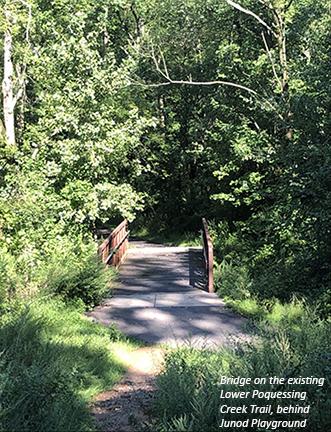
Green space is one of Parkwood's greatest assets. Poquessing Valley Park and the creek corridors provide wooded areas, walking paths and a welcome sense of separation from the surrounding roads and commercial development.
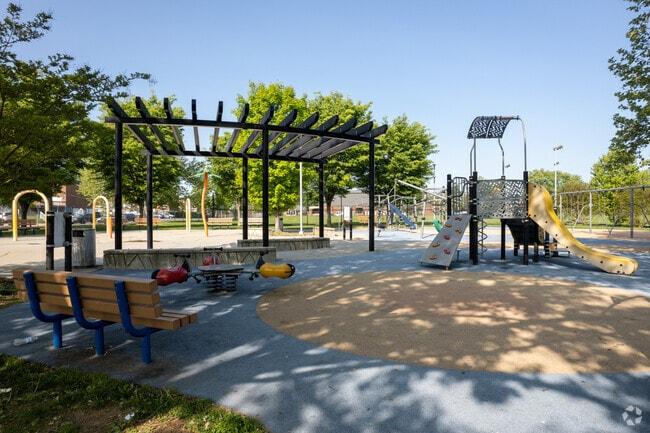
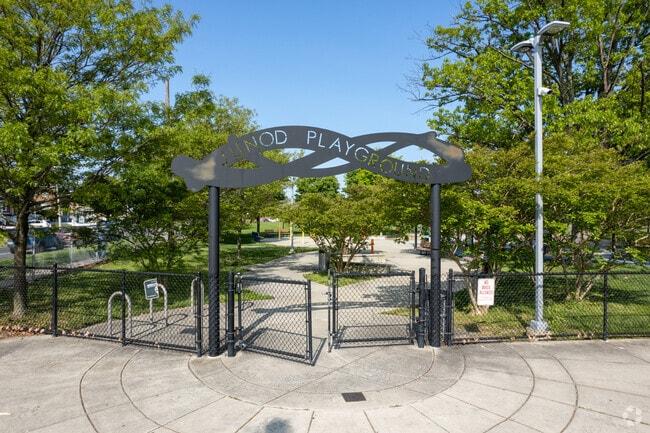
For families, the neighborhood has several recreational resources. Junod Playground includes athletic fields and recreation facilities, while Fitzpatrick Playground and Fitzpatrick Recreation Center provide additional playground and recreational opportunities. The Parkwood Youth Organization is also an established community presence, offering youth sports programs. (Homes.com)
For more ambitious outdoor excursions, Pennypack Park is within a short drive. The enormous Fairmount Park property follows Pennypack Creek for about nine miles and includes more than 1,600 acres of woods, meadows, wetlands and trails for hiking, biking and horseback riding. (Visit Philadelphia)
For everyday errands, residents have the Parkwood Shopping Center, centered around Academy Road and Byberry Road. Reen's Delicatessen is a longtime neighborhood deli, while Philly Pretzel Factory provides one of those quintessential Philadelphia-area quick food stops. Pat's Pizzeria is another established Parkwood Shopping Center option.
And then there's Philadelphia Mills, the huge shopping and entertainment complex just beyond the residential portion of Parkwood. It provides an extensive collection of stores, restaurants and family-oriented activities. Dave & Buster's remains at the complex, combining a restaurant, sports bar and large arcade. (Dave & Buster's)
One change worth noting: the AMC Philadelphia Mills 14 has permanently closed; AMC currently directs moviegoers to its Neshaminy 24 location in nearby Bensalem. (AMC Theatres)
Parkwood is particularly convenient for drivers. Woodhaven Road, Roosevelt Boulevard (U.S. 1), Knights Road, Byberry Road and Route 63 provide connections throughout Northeast Philadelphia and into the surrounding suburbs. Interstate 95 is readily accessible toward the east, providing a direct regional connection toward Center City, the airport and New Jersey. (Living Places)
Public transportation is available, although this is a neighborhood where having a car is generally more convenient than relying entirely on transit. SEPTA bus routes serving the broader 19154/Parkwood area include Routes 14, 19, 20, 58 and 84, with connections toward Frankford Transportation Center and the Market-Frankford Line. Nearby Torresdale Regional Rail Station provides another option for Center City commuters. (Andre Richardson — Philadelphia Realtor)
Parkwood's biggest surprise may be how much nature there is around a neighborhood that was built largely during the postwar suburban boom.
The community isn't surrounded by the historic stone houses or mature landscapes found in some older Philadelphia neighborhoods. Instead, its appeal comes from the way the planned residential development was laid out around creek valleys, parks and open land.
Poquessing Creek is particularly important. The creek and its tributaries weave through the Far Northeast, creating pockets of woods and open space between residential and commercial areas. Nearby Benjamin Rush State Park adds another major stretch of open land. (Wikipedia)
There's also an interesting historical layer beneath the relatively young housing stock. The larger Byberry area dates back centuries, with Native American settlement preceding European settlement. Byberry Township was eventually incorporated into Philadelphia in 1854. The area later became associated with Byberry Hospital, while the former institutional lands eventually became industrial and parkland. (Wikipedia)
The Mechanicsville School, a reminder of the area's pre-Parkwood history, was listed on the National Register of Historic Places in 1986. (Wikipedia)
In other words, Parkwood may look like a 1960s suburb, but it sits on a landscape with a much older story.
Parkwood's housing market is primarily a moderately priced, owner-oriented townhome market, which helps explain its continuing appeal to buyers looking for more space and parking than they might find in many other parts of Philadelphia.
Current housing data vary somewhat depending on the source and whether the measurement is based on asking prices, estimated values or closed sales. The most useful recent closed-sale benchmark is from Redfin: for the three months ending in August 2026, Parkwood's median sale price was approximately $340,000, with homes spending an average of about 36 days on the market. (Redfin)
For comparison, Realtor.com reported a $337,000 median listing price for Parkwood, while Zillow reported a $333,333 median sale price for ZIP Code 19154 in June 2026. (Realtor)
So, rather than assigning a single "average" price—which can swing considerably depending on the mix of homes sold—a reasonable current market description is:
Typical Parkwood sale price: roughly $330,000–$340,000, with individual properties varying according to size, condition, location and updates.
The neighborhood's classic brick townhomes generally represent the heart of the market. Some larger or detached homes can command substantially more. Homes.com notes that many Parkwood rowhomes list in the $250,000–$350,000 range, while some detached Colonials can reach around $500,000. (Homes.com)
The current market also illustrates an important point for buyers: Parkwood isn't simply an inexpensive Philadelphia neighborhood. Its combination of garages, relatively generous living space, established landscaping, parks and suburban layout gives it a distinct market identity within the city.
Parkwood is a good fit for someone who wants a little more elbow room without giving up the Philadelphia address.
You get brick homes with garages, sidewalks, backyards and relatively quiet streets. You get neighborhood parks where children can play and community sports can flourish. You have shopping close by, including Philadelphia Mills, and plenty of everyday restaurants and services. And when you want more nature, Poquessing Creek, Pennypack Park and nearby open spaces are close at hand.
Perhaps most appealing is the sense that Parkwood was designed to function as a community. Its homes, shopping center, schools, recreation facilities and parks were planned together rather than developing independently over several centuries.
For buyers who want the conveniences of Northeast Philadelphia with a distinctly suburban atmosphere, Parkwood offers an interesting combination: city ownership and city services, suburban-style housing, easy highway access and an unexpectedly green setting.