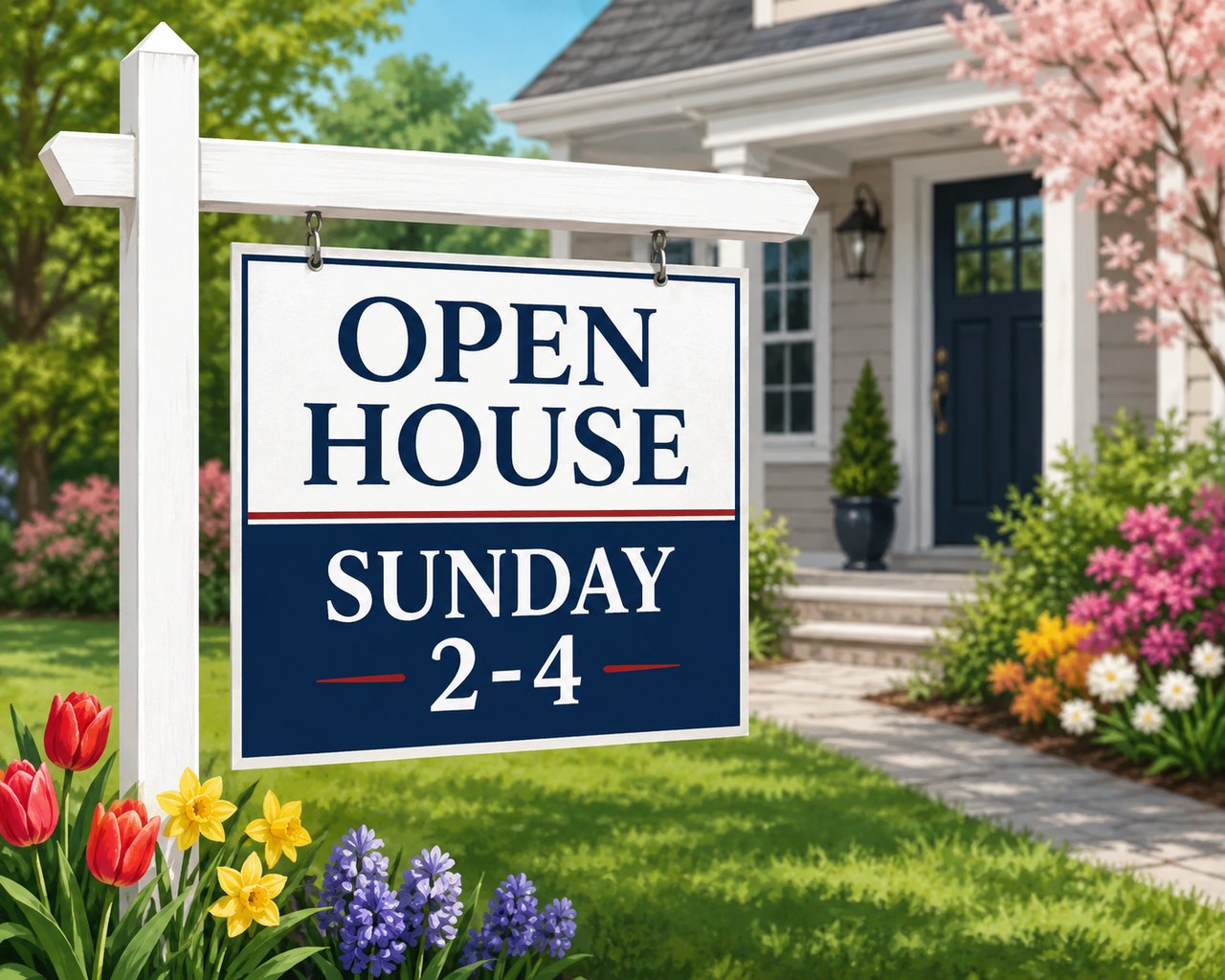
Open Houses Don't Usually Sell Homes—They Help Sell Homes
According to the National Association of Realtors, only about 4% of buyers say they found the home they ultimately purchased through an open house or yard sign. Most buyers discover homes online first and then schedule a private showing with their agent.
So why do experienced agents still recommend open houses?
Because their greatest value isn't usually finding the buyer—it's creating excitement around a new listing. A well-timed open house generates additional exposure, encourages online engagement, gives buyers an easy opportunity to tour the home, and can create the sense of competition that leads to stronger offers.
Think of an open house as one piece of a comprehensive marketing strategy. Professional photography, online advertising, social media, email campaigns, private showings, and an open house all work together to maximize exposure during the critical first two weeks a home is on the market.
The goal of an open house isn't necessarily to sell your home during those few hours on a Sunday afternoon. It's to market your home to the broadest possible audience—because in today's market, the buyer who ultimately writes the winning offer has often already seen the home online and will usually make their final decision after a private showing.
The research largely supports the idea open houses are primarily a marketing event, not the event that directly sells a home. They create awareness, urgency, and social proof, but today's buyers overwhelmingly discover homes online and typically make purchasing decisions after a private showing.
Key Statistics
The strongest industry data comes from the National Association of Realtors (NAR):
97% of buyers use the internet during their home search.
52% of buyers found the home they ultimately purchased online.
Only about 4% of buyers found the home they purchased through an open house or yard sign.
That last statistic is often misunderstood. It does not mean only 4% of buyers attended an open house. It means only about 4% say the open house was how they first discovered the property. That distinction is important.
Many buyers:
see the home online,
ask their agent about it,
attend the open house because it's convenient,
then schedule a private showing before writing an offer.
What Open Houses Actually Do
Today's listing launch is typically a coordinated marketing campaign:
MLS publication
Zillow/Realtor.com syndication
social media marketing
email campaigns
agent-to-agent marketing
private showings
open houses
The open house creates momentum by:
making it easy for multiple buyers to view the home
generating discussion on social media
increasing online saves and clicks
creating a sense of competition
giving the listing agent valuable feedback on pricing and presentation
Industry experts increasingly describe the open house as the public event within a larger marketing strategy—not the primary selling mechanism.
What About Greater Philadelphia?
Local market behavior suggests some clear trends.
Open houses tend to be much more common in:
Center City Philadelphia
Main Line communities
Jersey Suburbs
Ardmore
Narberth
Media
West Chester
desirable Montgomery and Bucks County neighborhoods with strong weekend buyer traffic
They're generally less common in areas where:
homes receive multiple private showing requests immediately after listing
luxury properties require appointments
sellers value privacy
rural properties are farther apart
In highly competitive suburban neighborhoods, agents often hold one launch-weekend open house, then rely primarily on private showings afterward.
One Interesting Perspective
Many experienced agents say an open house often benefits the seller indirectly rather than directly. Instead of producing "the buyer," it:
reminds buyers already watching the listing to see it that weekend,
creates fear of missing out,
increases the number of offers arriving at the same time.
That's very different from saying someone walked in off the street and bought the home.